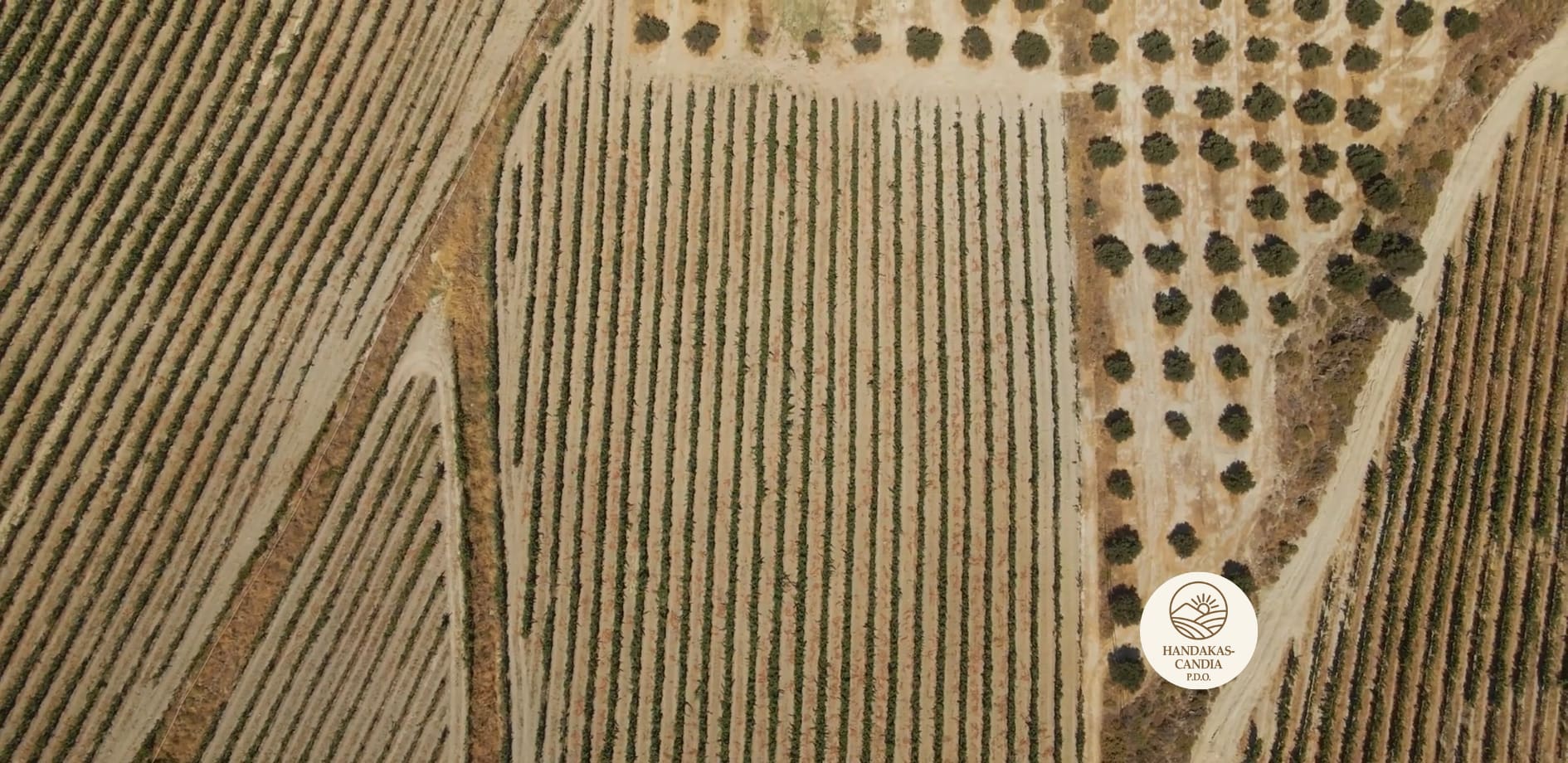
Among Greece’s many historic wine regions, few combine ancient viticultural heritage with modern precision as successfully as PDO Handakas–Candia.
Officially established in 2011 within the Regional Unit of Heraklion, the appellation represents an important chapter in the continuing evolution of Cretan wine, preserving indigenous grape varieties while showcasing the remarkable terroir that has supported viticulture on the island for millennia.
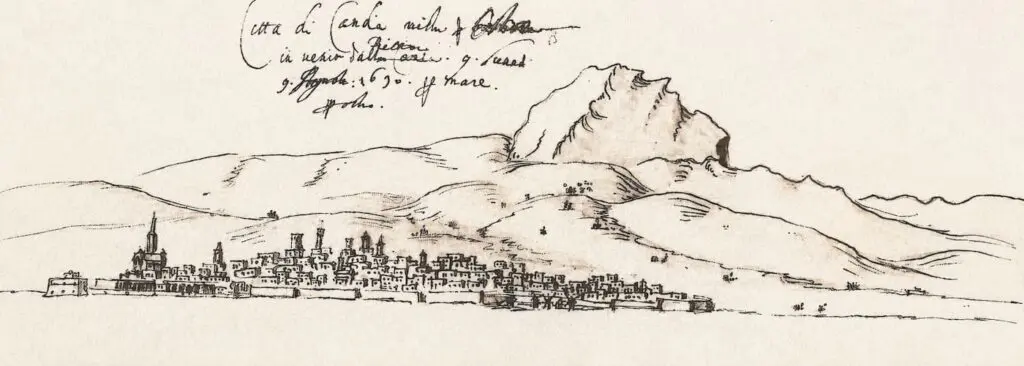
Named after the historic Venetian name for Heraklion, Candia, the PDO reflects both the region’s cultural significance and its renewed focus on quality-driven production.
Although Crete has produced wine since the Minoan civilization more than four thousand years ago, today’s producers are demonstrating that the island’s future may be every bit as compelling as its past.
Defining the Terroir
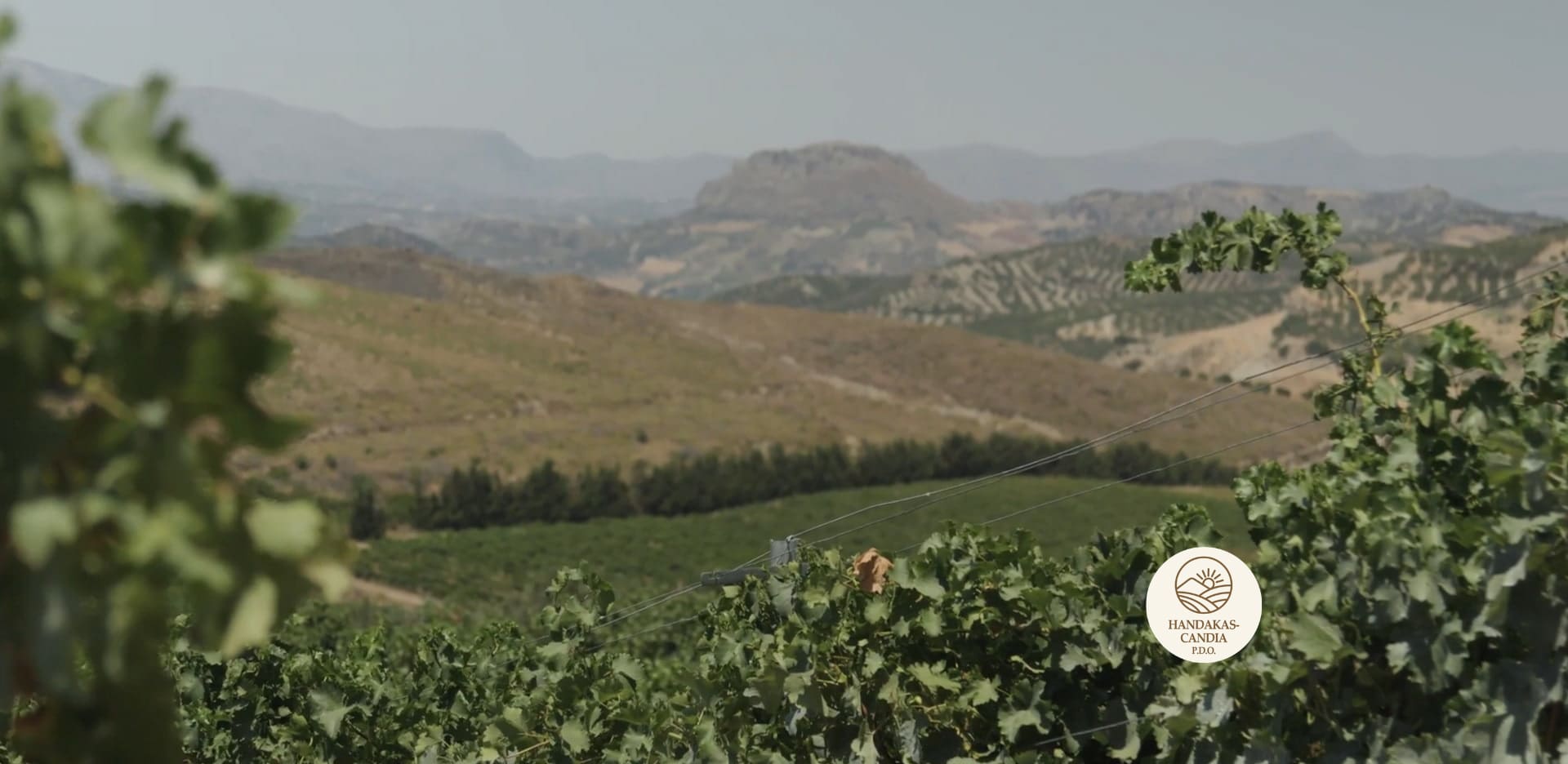
Handakas–Candia benefits from a classic Mediterranean climate that is moderated by altitude and maritime influence.
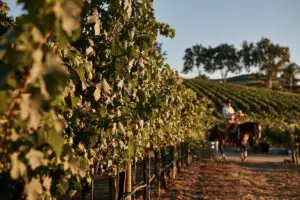
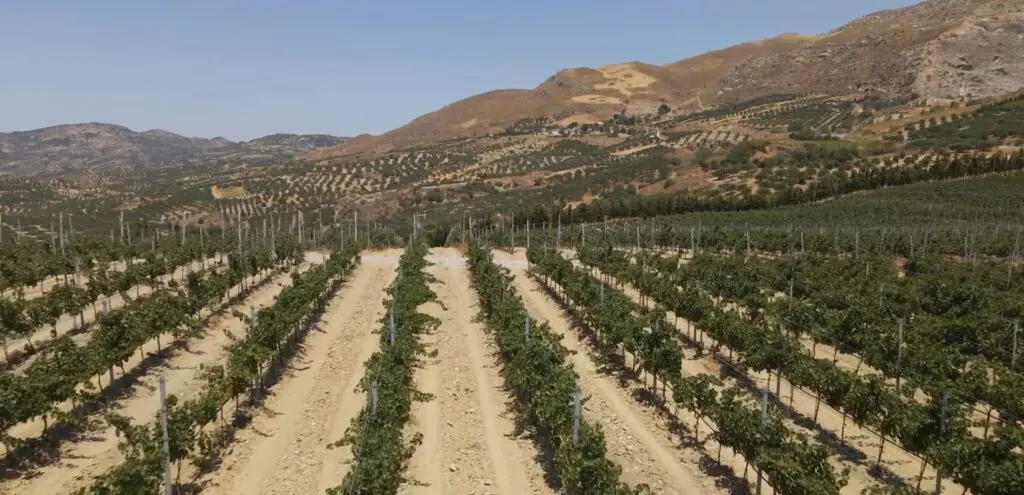
Vineyards extend across rolling hills and mountain slopes reaching elevations of approximately 700 metres above sea level. Warm days encourage complete phenolic ripening, while cooler evenings and consistent northern winds preserve acidity and aromatic definition. This extended ripening period contributes both concentration and freshness, characteristics that have become hallmarks of the appellation.
The result is wines that combine Mediterranean generosity with notable balance, precision and ageing potential.
Why PDO Matters
Protected Designation of Origin represents the highest level of geographical protection within the European Union’s wine classification system.
Rather than functioning solely as an indication of origin, PDO establishes legally defined standards governing grape varieties, vineyard practices, production methods and wine styles. These regulations are designed to preserve authenticity while ensuring that each bottle expresses the characteristics of its specific place of origin.
Within Handakas–Candia, those regulations also safeguard Crete’s indigenous viticultural heritage.
Indigenous Varieties at the Centre
White wines produced under the PDO must contain a minimum of 85 per cent Vilana, reinforcing the variety’s role as the appellation’s defining white grape.
Vilana typically produces medium-bodied wines with bright acidity, citrus, green apple, white peach and subtle floral aromatics. Its restrained aromatic profile and naturally refreshing structure make it particularly well suited to Mediterranean cuisine.
Supporting varieties including Vidiano, Thrapsathiri and Athiri may be incorporated in smaller proportions to contribute additional texture and complexity while maintaining regional typicity. Assyrtiko may also appear within the blend, although unlike its more austere volcanic expression in Santorini, its contribution within Crete tends to integrate into a broader Mediterranean profile.
Red wines rely on the traditional partnership of Kotsifali and Mandilaria.
Kotsifali provides generous red fruit, ripe cherry, plum and supple tannins, while Mandilaria contributes colour stability, structural tannins and ageing capacity. Together they produce balanced wines that successfully combine approachability with longevity.
These varieties remain central to preserving Crete’s distinctive wine identity.
Tradition Supported by Modern Winemaking
Although rooted in one of Europe’s oldest wine cultures, contemporary producers employ modern cellar techniques to maximise fruit purity and site expression.
Temperature-controlled fermentation protects aromatic freshness in white wines, while carefully managed extraction and maturation preserve balance in reds. Wines designated Réserve and Grande Réserve are subject to additional ageing requirements before release, reinforcing the PDO’s emphasis on quality and consistency.
Rather than replacing tradition, modern techniques serve to better express the unique characteristics of the region.
The Growing Importance of Handakas–Candia
As international wine consumers increasingly seek authenticity, regional identity and indigenous grape varieties, Handakas–Candia occupies an increasingly important position within the global wine conversation.
Its wines are not interpretations of international varieties but genuine expressions of place, shaped by altitude, climate, native grapes and centuries of uninterrupted viticultural history.
For wine professionals, collectors and curious enthusiasts alike, PDO Handakas–Candia offers an opportunity to explore one of the Mediterranean’s most compelling appellations through wines that are simultaneously historic, contemporary and unmistakably Cretan.
Understanding the region is not simply about discovering another Greek wine. It is about appreciating one of Europe’s oldest wine cultures through the lens of a modern appellation that continues to define the future of Cretan viticulture.
Renée has dedicated her life to grapes. As a Court of the Master Sommeliers Certified Sommelier, she has made wine her life’s work, and her entrepreneurial spirit has driven her to be a curator of wine experiences. In her work as a Wine Communicator, Curator of Virtual Experiences, Brand Consultant, Educator and Wine Writer Renée brings to life her love of wine in a way that is contagious. She has a flair for making wine fun and understandable, sharing her passion for the vine.