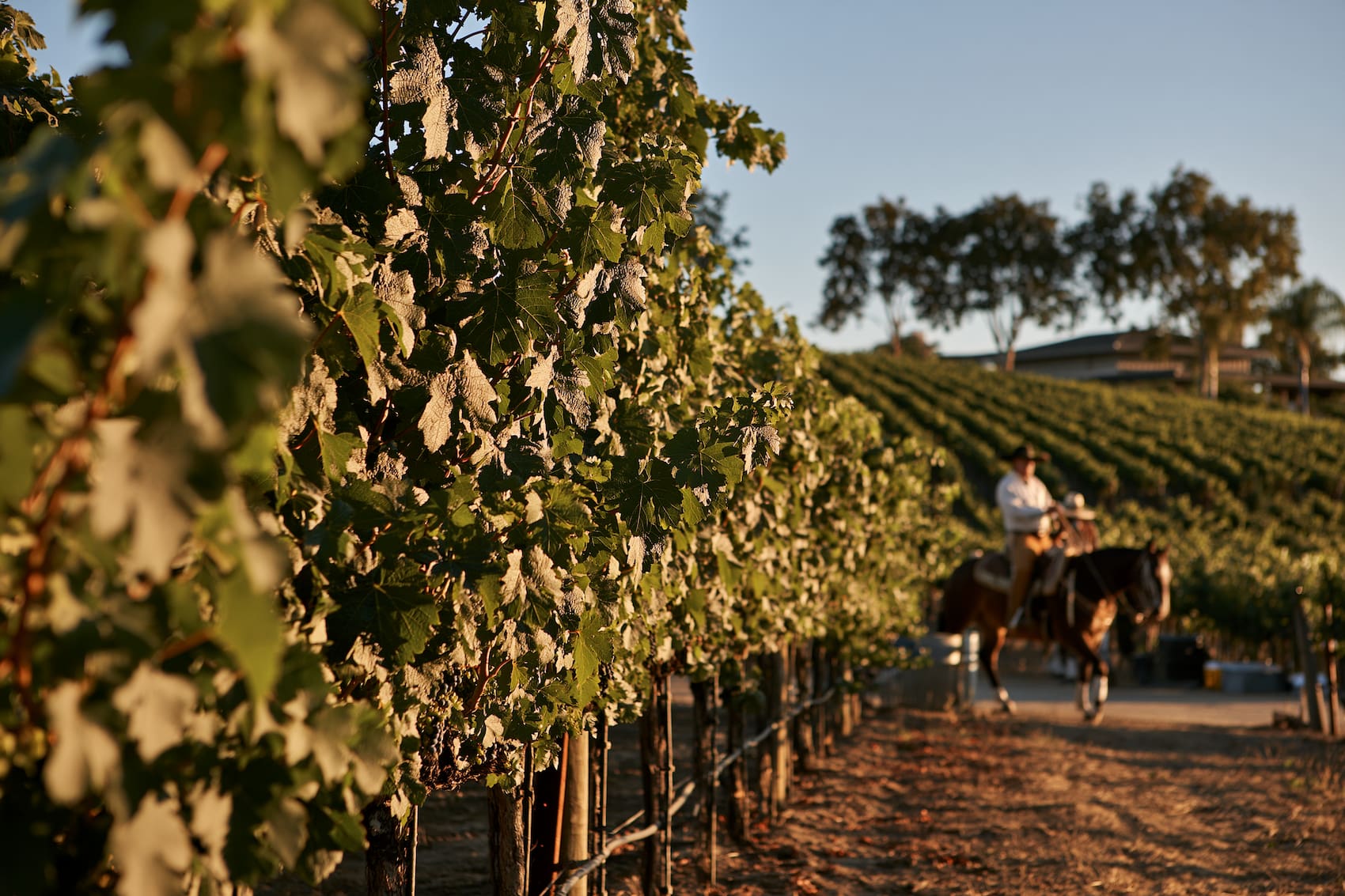
Celebrating Hispanic Voices in American Wine
From the vineyard to the cellar, Hispanic and Latino families have been part of American wine for generations. They have tended vines, picked grapes, worked harvests, and helped build an industry enjoyed around the world.
Their contributions run deep. The recognition hasn’t always followed… until now.
Since the industry began, we’ve been accustomed to names like Martinelli, Mondavi, Sebastiani, and others on the bottles. Today, however, more and more Hispanic and Latino families are appearing as well, from the bottles to the winery gates and tasting room doors. Names like:
Ulloa. Barrios. Martinez. Contreras. Puentes. Gonzales.
Hispanic Heritage Month, observed from September 15 through October 15, is a national celebration of Hispanic and Latino history, culture, and contributions to American life, offering added recognition during this time.
The people featured here represent just a few of the many Hispanic and Latino voices shaping American wine. They came to it by very different paths, but what connects them is pride in their heritage and a determination to build something lasting, often with the next generation in mind.
Nancy Ulloa | Ulloa Cellars, Paso Robles
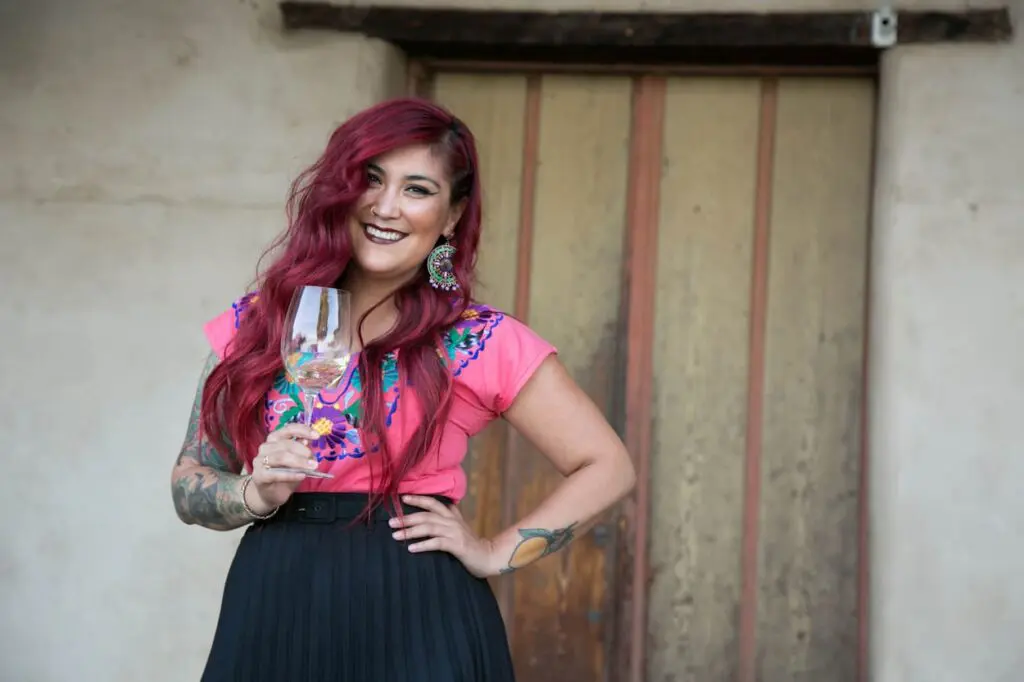
Nancy Ulloa was 12 when she came to the United States from Guadalajara, Mexico. Her father was seeking greater opportunity for his family, and they eventually settled in Salinas, California.
The transition wasn’t easy. Nancy didn’t speak English and suddenly found herself navigating an unfamiliar culture as she learned what it meant to be an outsider.
Years later, she would find herself in Paso Robles.
She still remembers one of her first impressions.
“I didn’t see anyone who looked like me.”
Nancy studied sociology in college and worked in hospitality before joining Thomas Hill Organics, where Debbie Thomas became an important mentor. Although she had some formal winemaking education, she learned mostly by doing. Wine wasn’t a childhood calling. She found her way into it gradually, through hard work and curiosity.
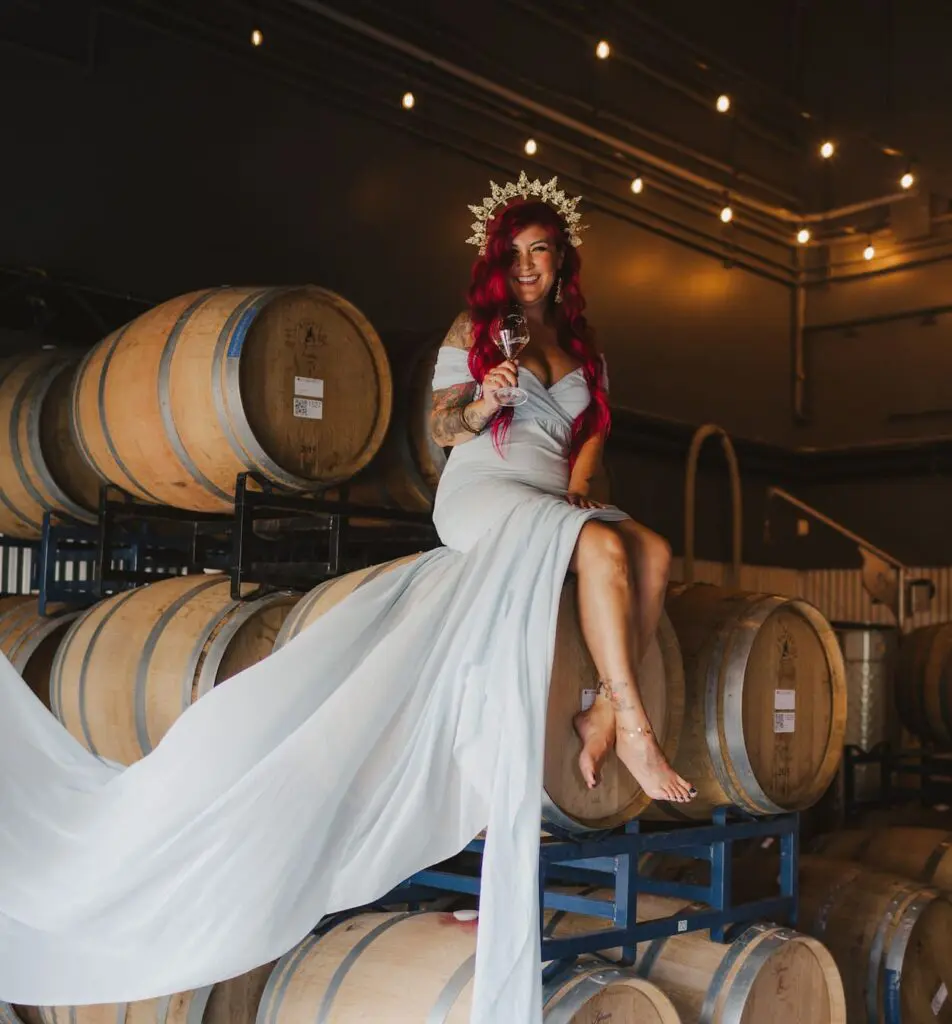
In 2020, Nancy released her first wine, 2019 Grüner Veltliner, under her new Ulloa Cellars label. She opened her Paso Robles tasting room in 2023. Two years later, Wine Enthusiast named her to its 2025 Future 40 list, recognizing people helping to shape the beverage industry. The magazine later profiled Nancy in The California ‘Wine Witch’ Casting a Spell on a New Audience. Nancy was indeed making her mark in Paso Robles and beyond.
That same year brought a more personal milestone. After more than 27 years in the United States, including 14 years as a Dreamer, Nancy received permanent residency and began looking ahead to U.S. citizenship.
Her experience has become part of how she approaches wine. Nancy speaks candidly about immigration and what it means to see more Latino winemakers represented in an industry where Hispanic workers have long played an essential role.
In her words:
“Drinking, supporting, and celebrating immigrants and Latino-made wines is an act of acceptance, bringing joy to the world. Diversity is the magic that makes this country special.”
Elena Martinez & Stanley Barrios | TOP Winery, Paso Robles
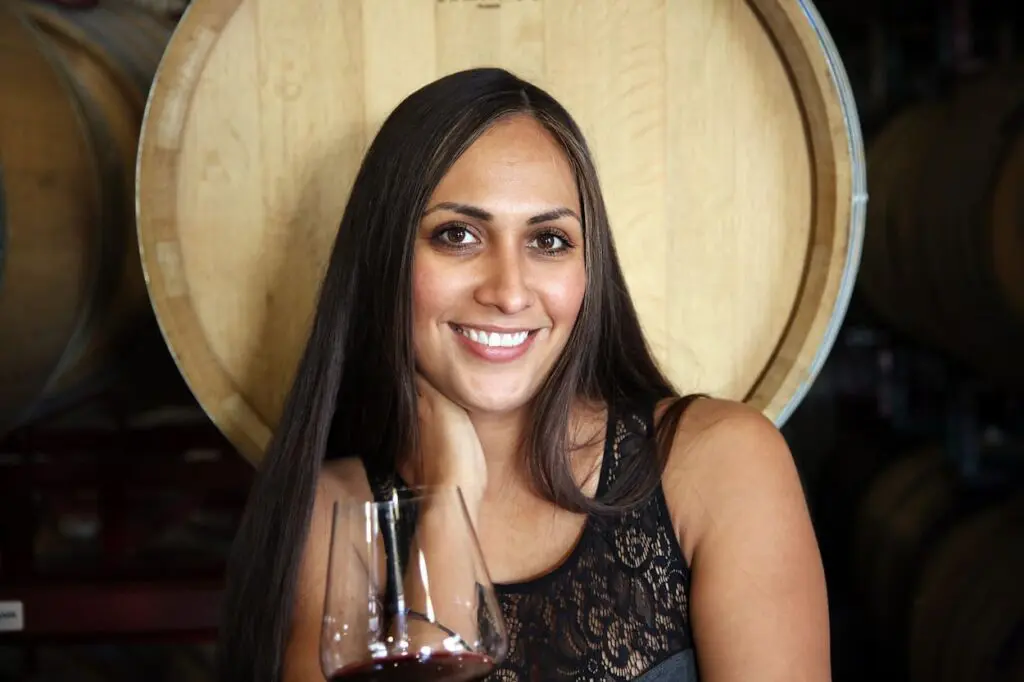
Elena Martinez and Stanley Barrios are first-generation Hispanic winemakers whose family histories stretch from Guatemala and Mexico to Peru and El Salvador.
Their parents came to the United States in the 1970s under very different circumstances, but both families were looking for greater security and opportunity.
Elena’s parents came from Guatemala and Mexico. After the devastating 1976 earthquake in Guatemala, which brought humanitarian aid from the United States, they eventually made their lives here and later became U.S. citizens. Elena was born in the United States.
Stanley’s parents came from Peru and El Salvador. Political instability pushed them to seek safety in the United States, where they too eventually became citizens.
Those family histories shaped how Stanley thinks about immigration and the wine business today.
“I’m grateful for my mom’s hard work, which provided us with food, and for the discipline she instilled in us. She set a standard for the effort required to succeed in tough environments.”
He also asks wine drinkers to consider something that is easy to miss once a bottle reaches the table: the people behind it.
“Most producers depend on immigrants to farm vineyards, sort grapes, clean and maintain cellars, and often oversee bottling.”
Elena and Stanley didn’t begin their careers in wine. Both left successful corporate careers after developing a serious interest in it.
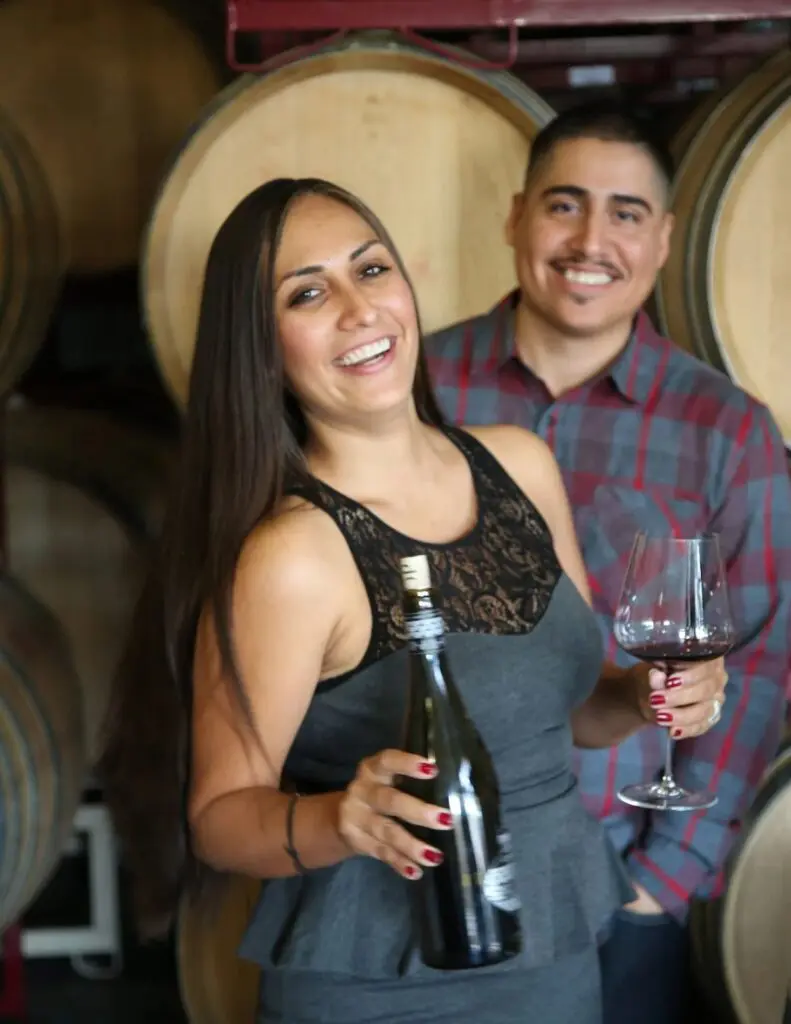
Stanley learned from the ground up and completed a two-month harvest internship in 2013. He and Elena eventually built TOP Winery in Paso Robles.
The wines got noticed.
TOP has appeared on Jeb Dunnuck’s Top 100 Wines of the Year in 2022, 2023, and 2025. A decade after the winery’s first release, Elena and Stanley earned a perfect 100-point score on one of their wines.
The recognition matters, but their families’ histories remain close.
Elena has become active in her community, helping Hispanic families understand their legal rights and connect with resources when they need them.
Stanley sees the same connection in the vineyard.
“Modern farming and winemaking in the United States would not be possible without the migrant workers who, like our own parents, came to this country to build something greater than themselves. We take immense pride in knowing that every bottle of our wine reflects the hard work of individuals from Mexico, Central America, and South America.”
For Elena and Stanley, the people behind the bottle are never an afterthought. They are part of the reason TOP Winery exists.
Juan Contreras | V1NOJUAN, Paso Robles
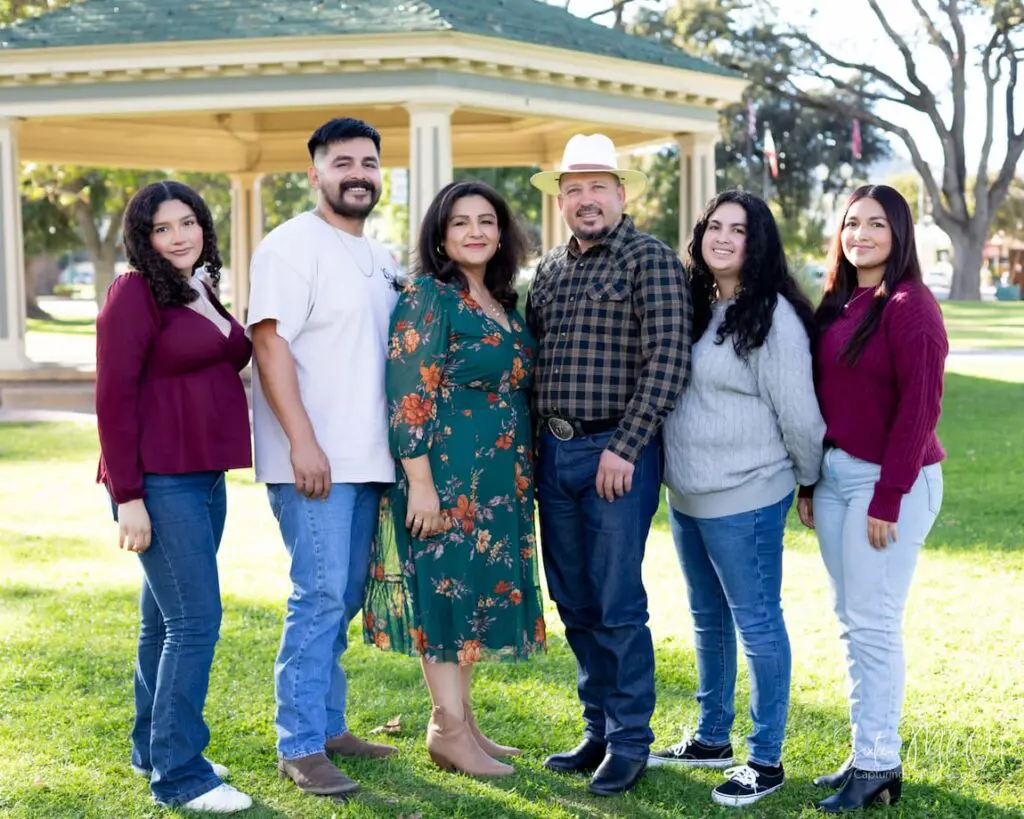
Long before Juan Contreras put his own name on a bottle, he worked the fields of California’s Central Valley; before that, he worked alongside his father while the family was still living in Mexico.
He arrived in the United States in 1992 at age 14 after leaving a small town south of Guadalajara, Mexico. His father wanted what so many immigrant parents have wanted: greater opportunity for his family. Juan and his father began to help immigrate his 9 siblings and mother, getting them Green Cards, which took 5 years, between 1996 and 2001.
Juan worked alongside his family picking berries and vegetables and tending grapes. A few years later, they moved to Paso Robles. With a work permit, Juan worked a harvest at Meridian before joining Robert Hall Winery in 1998.
He started in the dirt.
Juan worked his way from the vineyard into the cellar, eventually becoming cellarmaster. Along the way, he took courses whenever he could and became particularly interested in responsible farming. At Robert Hall, winemaker Don Brady became an important mentor, encouraging Juan to learn English and helping deepen his understanding of wine from the vineyard forward. Robert Hall also mentored Juan, paying for Juan to take some college classes and English.
While building his life in California, Juan met his wife, Fabiola, in 1997. Their first daughter, Jennifer, was born in 1999, and their daughter, Lillie, was born in 2003. Juan received his green card in 2001 and became a U.S. citizen in 2010.
None of it came easily. Juan worked long hours and sent money home while continuing to learn. He also experienced discrimination as he navigated a new country and language.
Family remained at the center of his life. So did an idea Juan couldn’t quite let go of: making wine under his own name.
For years, he made small batches for friends and family and imagined what might happen “one day.”
In 2023, he began the process of licensing his own business and preparing wines for release.
In 2025, one day arrived.
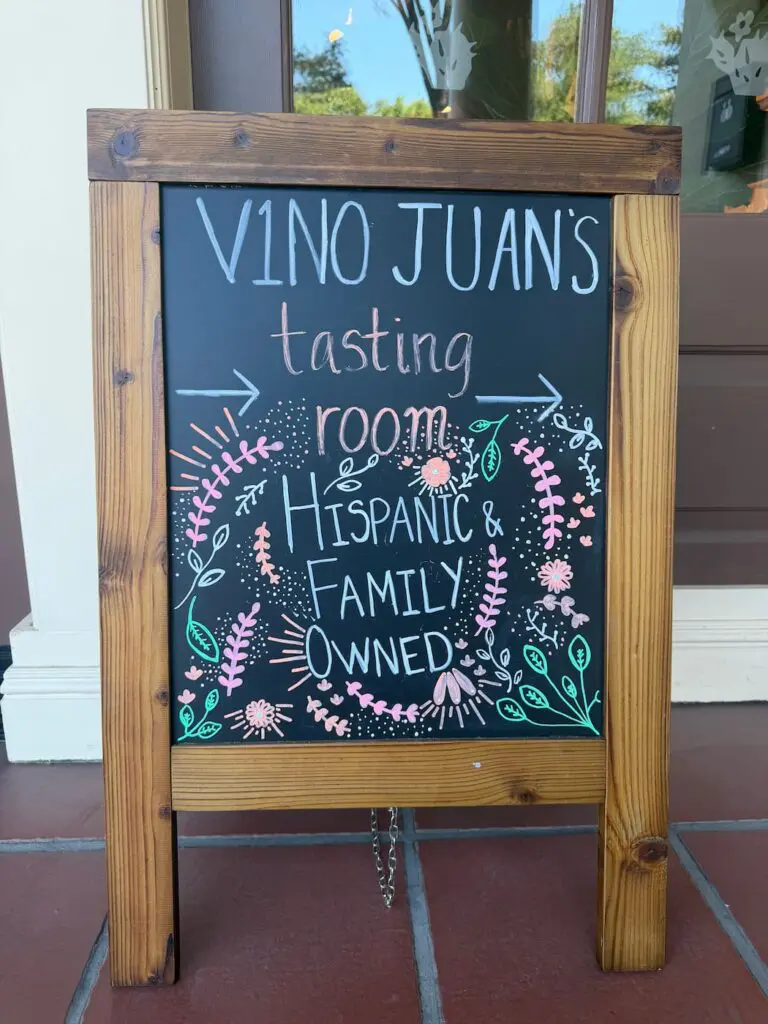
Juan opened the V1NOJUAN tasting room in Paso Robles. His daughter Lillie now handles marketing and the tasting room, while Juan continues working as co-winemaker for CaliPaso and making wine for several other wineries.
After decades of learning the business from the ground up, other producers now entrust him with their wines.
Lillie has also found her own voice in the community. Concerned about the uncertainty facing local immigrant families, she has shared information about free legal resources and made “Know Your Rights” cards available to people who may encounter immigration authorities.
As Lillie put it:
“Everyone deserves a chance to succeed. No one can defeat a community like Paso Robles, built on love, family, and trust. We will always fight for our people and for what is right.”
For the Contreras family, perhaps the clearest expression of that American dream is also the simplest: their name is now on the bottle.
Miriam & Juan Puentes | Honrama Cellars, Carneros
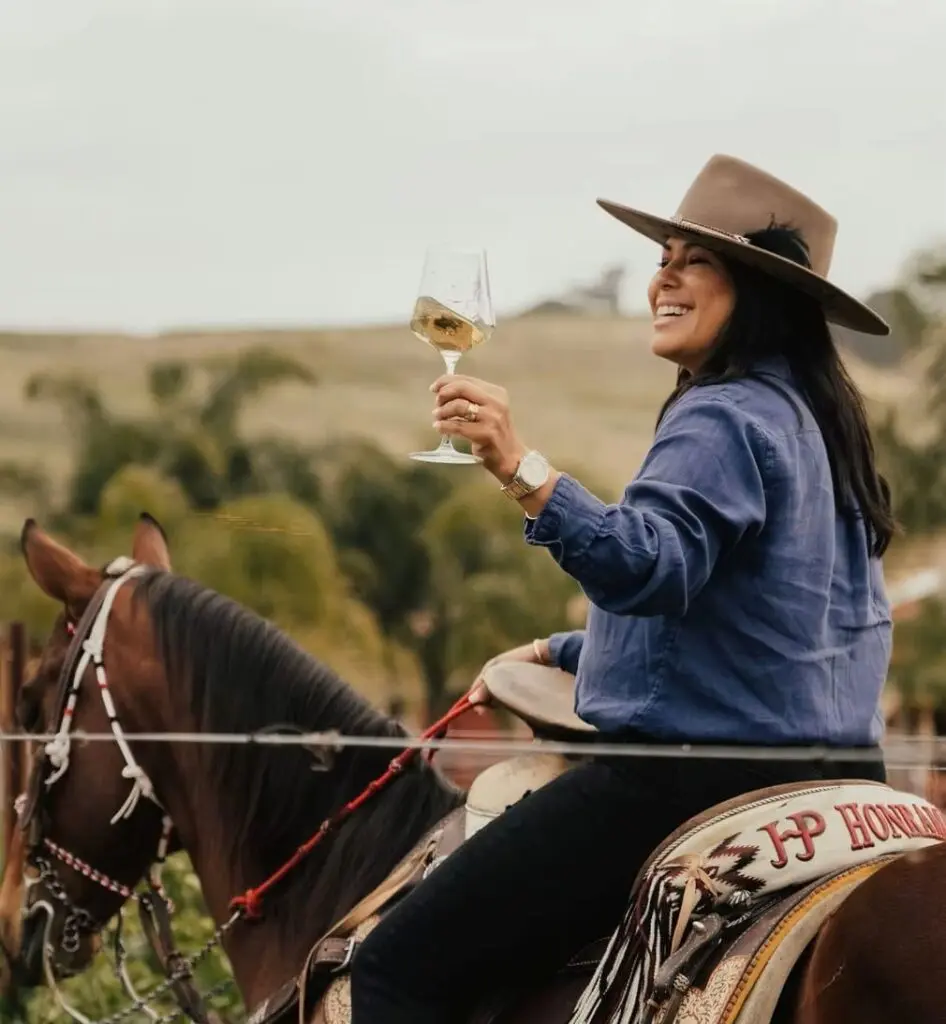
For Miriam and Juan Puentes, Honrama began with a dream that belonged to the generation before them.
Miriam was born in Mexico and came to the United States undocumented before eventually becoming a citizen through the Amnesty Program. Juan was born in Woodland, California. His family’s history moved back and forth across the border: his grandfather was born in San Francisco and lived between Mexico and California.
Both grew up in migrant farm camps. Their families had little, but Miriam and Juan don’t describe their childhoods in terms of what they lacked. They remember their parents and their faith, along with a belief that life could get better.
For Miriam, wine was part of that story early on.
Her father, Honorio Ramirez Mata, worked in the vineyards for Chuck Wagner and dreamed of making his own wine one day.
He died young, before he had the chance.
Miriam never forgot the dream.
When she met Juan in 1999, she told him about it. Juan hadn’t grown up, as he put it, with “wine or grapes in his veins.”
He was all in anyway.
They took classes and learned from mentors. Eventually, they were able to buy land and plant grapes.
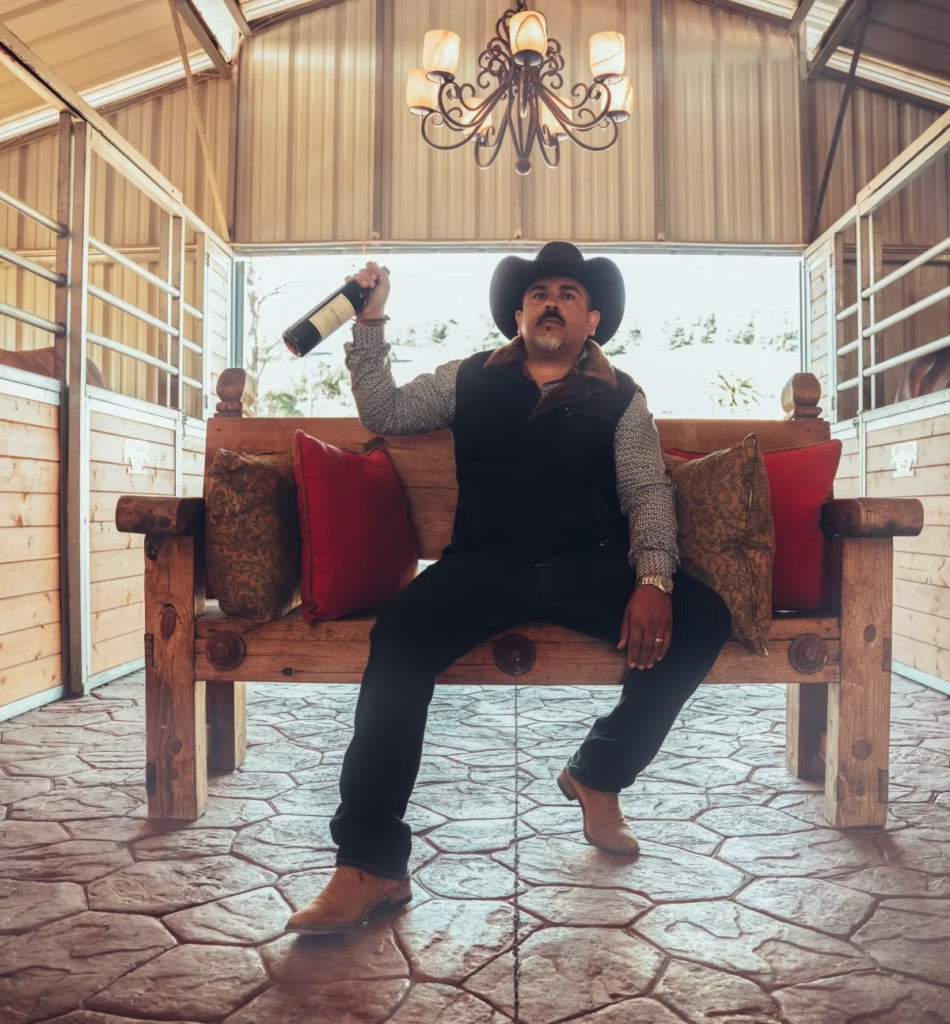
In 2008, they harvested their first fruit. A few years later, they released 500 cases of wine.
They called the winery Honrama, a name created in honor of Miriam’s father, Honorio Ramirez Mata.
His dream was now on the label.
The family they built around Honrama is as much a part of its identity as the wine. Miriam or Juan may be the one pouring in the tasting room, where the wines can range from sparkling and rosé to Cabernet Sauvignon.
Their Mexican-American heritage isn’t treated as decoration. It’s simply part of who they are.
So are horses.
Juan’s love of them grew into a herd of show horses and a family connection to charrería, the official sport of Mexico, recognized by UNESCO. Two of their children compete. Their son became a world champion in his age group, while their daughter competes in Escaramuza, the women’s equestrian event within charrería. Their oldest son attends UCLA.
For Miriam and Juan, seeing their children take pride in their heritage matters deeply.
That pride has taken on greater weight in recent years. Miriam spoke candidly about incidents of discrimination that her family had not experienced before and the conversations she and Juan now have with their children.
Their advice is direct:
“Pay attention to your surroundings. Because of our looks, we stand out, and you have nothing to be ashamed of. Remember: we walk on the earth with other humans. Be proud of your heritage and who you are, and always remember your faith and family.”
Those conversations haven’t changed the family’s attachment to the community they have spent years becoming part of.
Honrama’s own words capture the connection between generations:
“A Celebration of Opportunity, Labor, Resolve, and the bond of generations.”
For Miriam, that bond begins with a father who worked in the vineyards and dreamed of making wine. He never got to make the bottle himself.
His daughter made sure his name became part of it.
Cristina Gonzales | Gonzales Wine Company, Oregon
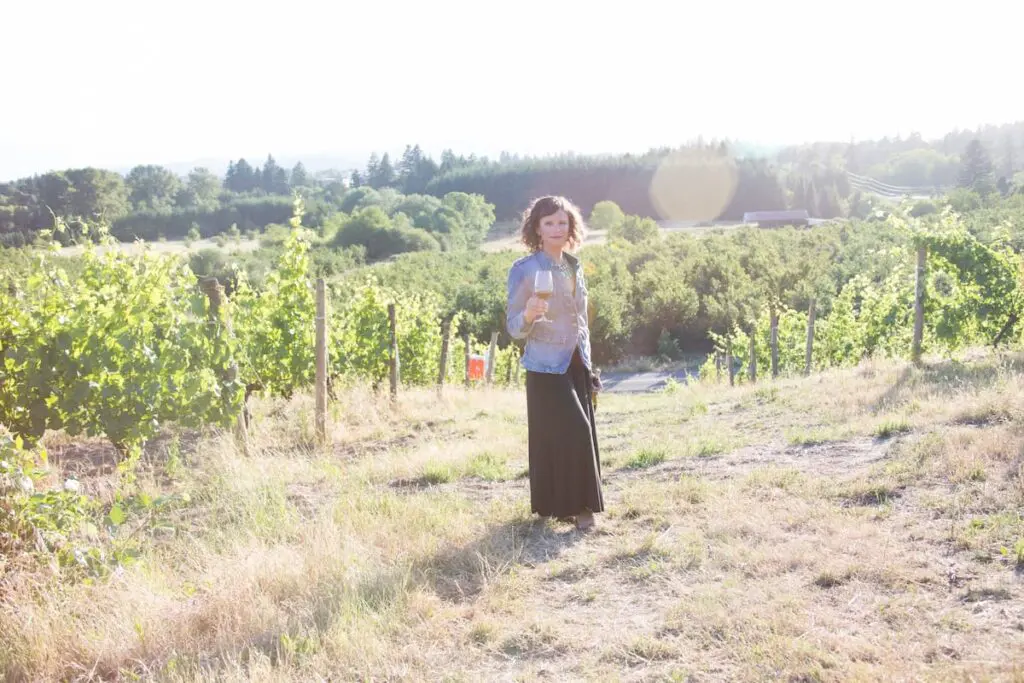
Cristina Gonzales grew up in Milwaukee with a Mexican-American father and a Polish-American mother. Her grandparents were migrant farmworkers who settled in Wisconsin to pick cherries. Growing up among different ethnic and cultural communities, Cristina saw both the value of inclusion and the realities of segregation, discrimination, and racism.
Cristina’s path to wine began in Mendoza, Argentina, over a glass of Malbec. This was her “A-ha” moment, bringing wine, heritage, and history together.
Today, she produces small-lot wines in Oregon’s Willamette Valley, but wine is only part of her work.
Cristina is particularly interested in creating more opportunity for the Hispanic people who already work throughout the wine industry. She currently serves as program coordinator for AHIVOY, an Oregon nonprofit providing vineyard workers with education and career-development opportunities. Her work includes fundraising, student programs, community resources, and educational programming for Hispanic vineyard workers.
She also speaks candidly about discrimination and the concern many Hispanic families are experiencing today. And she points to something she believes is too easily overlooked: how much this country depends on Hispanic workers. Their contributions extend far beyond vineyards and wineries into agriculture, hospitality, healthcare, construction, and other industries.
Cristina has found ways to address some of those issues through wine.
She offers tastings in Spanish and encourages other wineries to consider doing the same. Her efforts to make tasting rooms more welcoming to Spanish-speaking guests were the subject of a 2025 Wine Enthusiast feature.
But for Cristina, the conversation goes beyond who walks into a tasting room.
She sees Hispanic communities becoming more vocal about their contributions and increasingly proud of the place they have built for themselves in this country. The challenges of recent years, she believes, have also made those contributions harder to overlook.
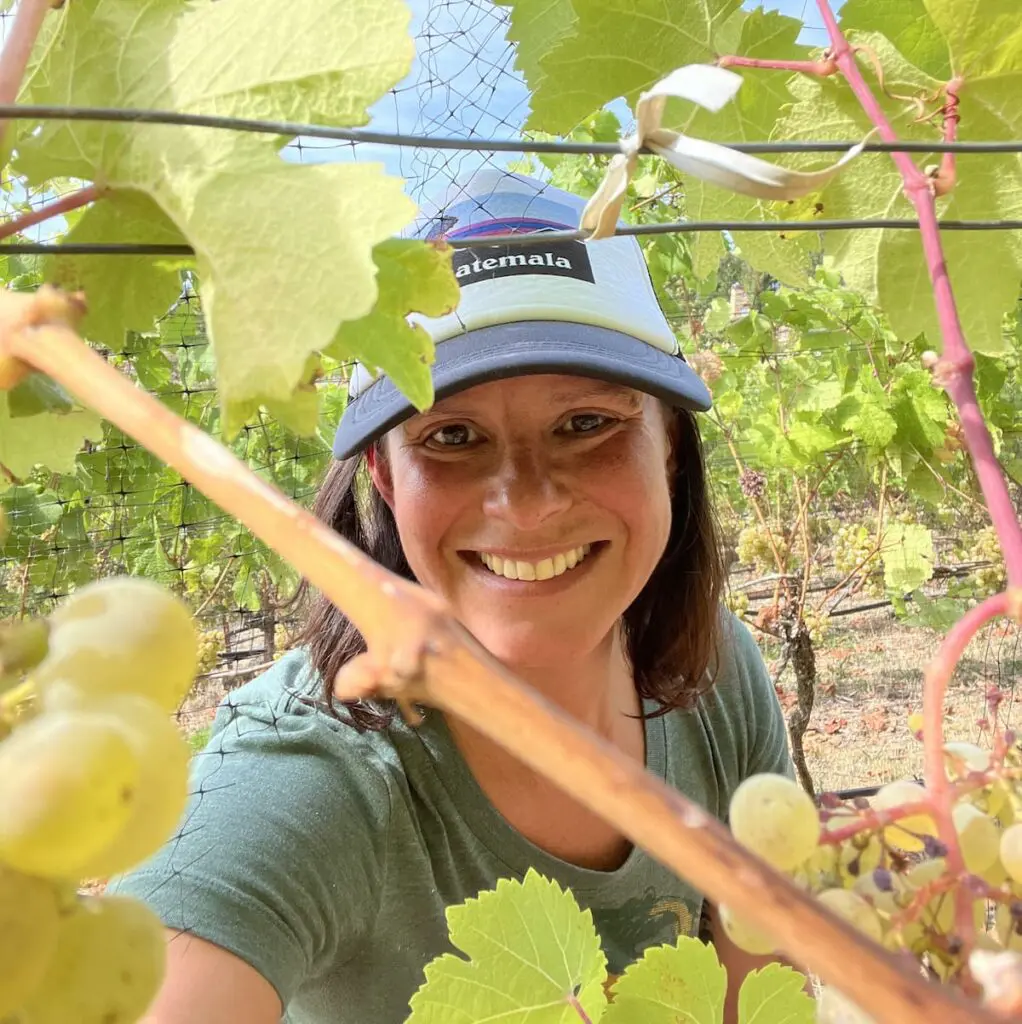
“The challenges and responses have made Hispanic communities resilient and proud,” Cristina says. “People now realize that we are here, we are staying, and we are contributing. This is just the beginning of a change, a sort of revolution, toward acceptance and respect.”
Cristina remains hopeful for the future. She believes greater understanding and acceptance can bring people together, and wine is one way she has chosen to do it.
Cristina Gonzales is more than an acclaimed winemaker. She is also a leader, mentor, entrepreneur, and advocate who is proud of her heritage and willing to speak openly about equality and opportunity. She has built her own wine company while working to support the Hispanic vineyard workers who have long been part of the industry.
Her story is her own version of the American Dream.
A Personal Connection
For Monarch Wine founder, Christina Rodehau, the stories in this article also connect to her own Salvadoran heritage and the origins of Monarch.
“My mom’s parents were incredibly proud of coming from El Salvador and equally proud to call California home. Some of my favorite memories were at my Nana’s house in San Francisco, eating pupusas and drinking Alpha Omega with my late aunt, who introduced me to wine. Monarch is a tribute to her, and those memories are a reminder that, for me, wine has always been about the people.”
America, Still in the Making
For 250 years, immigration has shaped America. Each generation has arrived from different places, but the hope behind many of those arrivals is familiar: the chance to build a life here, create greater opportunity for the next generation, and make a meaningful contribution to their communities.
For many Hispanic families, immigration and its challenges aren’t an abstract political issue. They are part of daily life. At the same time, immigrants have long performed work Americans depend on, often without receiving the same security, benefits, or recognition as others.
Today, Hispanic and Latino families are adding their own names to that history. They’re building legacies just as familiar and impactful as those of early Italian pioneers, who once faced the same challenges and stigmas. Those Italians went on to achieve universal recognition, and the time is long past due for Latino names to be recognized and respected in the industry as well.
The people in this article are shaping the next chapter of America and its wine history, one that gives greater visibility to Hispanic names, their families, and contributions. This Hispanic Heritage Month, we celebrate their stories and the lasting imprint of Hispanic heritage on American wine and on America itself.
For readers interested in learning more about organizations supporting Hispanic and Latino professionals, vineyard workers, winemakers, and entrepreneurs, the following groups are doing important work across the wine industry.
Asociación Hispana de la Industria del Vino en Oregón y Comunidad (AHIVOY)
AHIVOY is an Oregon nonprofit creating educational and professional opportunities for Hispanic and Latino vineyard workers in the Willamette Valley, helping participants overcome socioeconomic barriers and advance within the wine industry. Cristina Gonzales, featured in this article, serves on its board.
Hispanics in Wine & Spirits (HIWS)
A nonprofit organization focused on representation, education, and career advancement for Hispanic and Latine professionals throughout the wine and spirits industry in the United States and internationally.
Mexican American Vintners Association (MAVA)
An association representing Mexican American vintners and families whose histories in California wine often began as vineyard workers and stewards before progressing to winery ownership and leadership.
Mujeres de Acción
A grassroots organization serving San Luis Obispo County and empowering the local Latino community through programs spanning business, health, housing, and community leadership. Paso Robles winemakers Nancy Ulloa and Samantha “Sam” Mogull Esquivel of Rúakh Wines have also been recognized through the organization’s celebration of Latina entrepreneurs and community leaders.

Don Sonderling is a freelance writer covering California’s Wine Country lifestyle, and culture. He and his wife are constantly sipping their way from Santa Barbara to Napa, focusing on Paso Robles and the Central Coast, where they have explored for about 25 years. Don has earned his WSET2 (Wine and Spirits Education Trust) certification, has completed the Bourgogne Masterclass through the Napa Valley Wine Academy, and is a member of the LA. Wine Writers.
Focusing on the people and unique experiences to be had, Don’s goal is to have people read about California’s amazing wine country adventures, seeing it through his eyes, and say: “I want to go there, try that, meet them,” and enrich the lives of others as his has been, by exploring California’s wine roads.